A home EV charger starts from £1,000 supplied and fitted and should be installed on its own protected circuit, connected back to your existing consumer unit where possible rather than spurred off existing wiring. This guide explains how to choose a charger, whether your supply can cope, what happens on installation day, and why certification matters. All EV charger work should be carried out by a registered electrician.
You have collected your new electric car, and for the first week the novelty of charging it from a public point is fine. Then the reality sets in. You are queuing at a forecourt in the rain, watching the price per kWh, when you would far rather plug in on your own driveway overnight and wake up to a full battery. That is the moment most people decide it is time for a home charger. It is a genuinely good decision, but a home charge point is a permanent piece of electrical work on your house, so it pays to understand what a proper installation actually looks like before you book one in.
Choosing the Right Charger
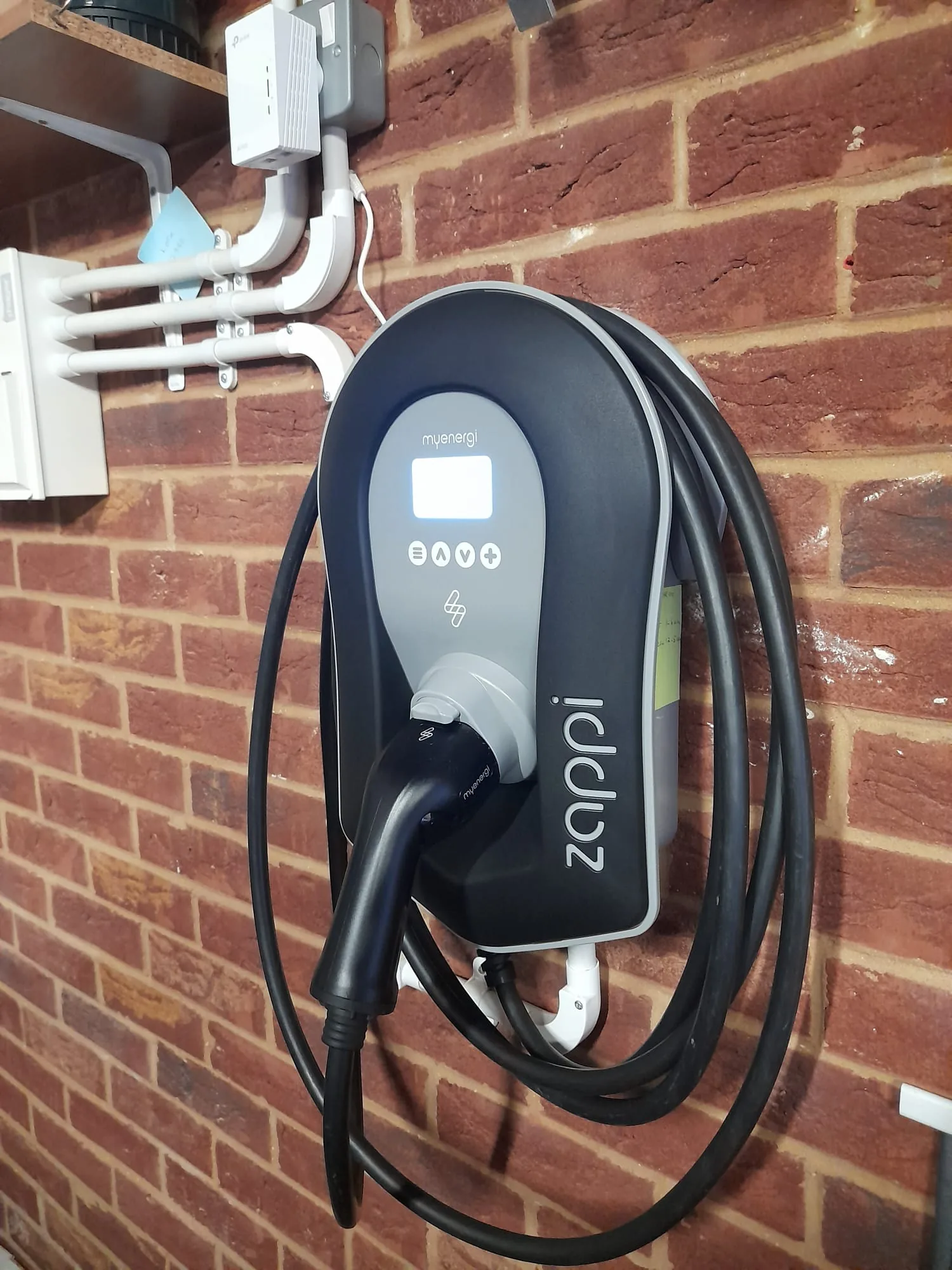
Nearly all home chargers sold in the UK are 7kW units, which is the right size for a standard single-phase domestic supply. The choices that matter are less about power and more about the type of unit and the features you want.
- Tethered vs untethered: A tethered charger has the cable permanently attached, so you just unhook it and plug in. An untethered (or socketed) charger has a socket on the unit and you use your own portable cable. Tethered is more convenient day to day; untethered keeps the cable out of sight and is more flexible if you change cars or cable types.
- Smart chargers: Since 2022, new home chargers sold in Great Britain must be smart chargers by law. A smart charger connects to your home network and lets you schedule charging, so you can set it to run on a cheap overnight electricity tariff and pay a fraction of the daytime rate. This one feature usually saves far more than the cost difference over the life of the unit.
- Matching it to your car: Almost every EV sold in the UK uses a Type 2 connector, so compatibility is rarely an issue. It is still worth checking your car's maximum onboard AC charging rate. Some cars accept the full 7kW, while a few older or plug-in hybrid models cap lower, in which case a cheaper unit may be all you need.
- Where it goes: The neatest results come from mounting the charger close to where the car parks and close to your consumer unit, which keeps the cable run short and tidy. I will always talk through the best position with you before anything is fixed to the wall.
My advice is to choose the unit that suits your car and your driveway, not the most expensive one on the shelf. I am happy to recommend a charger that fits how you actually use your car rather than upsell you features you will never touch.
Why It Needs Its Own Protected Circuit
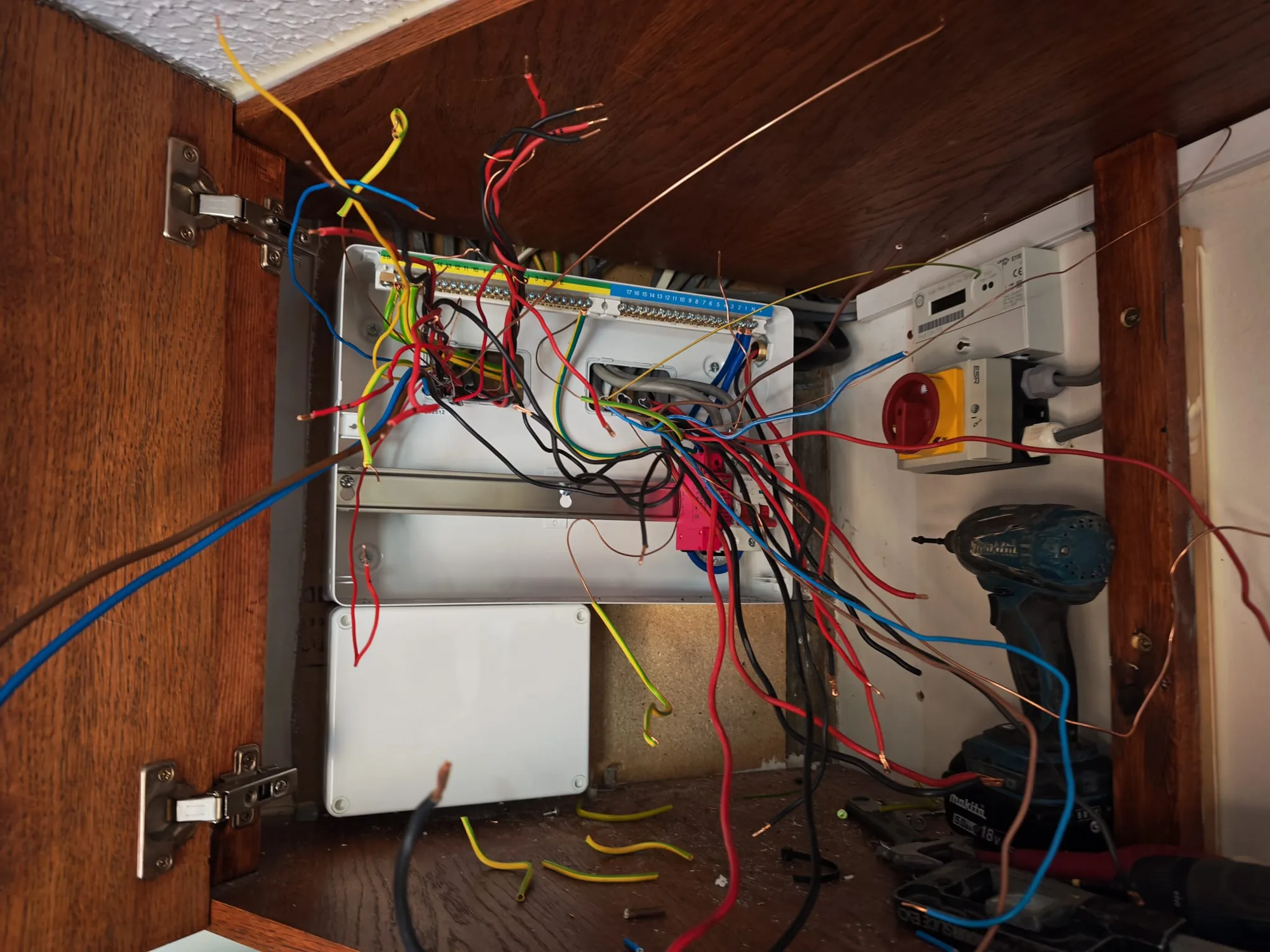
This is the part that separates a proper installation from a quick one, and it is worth understanding. A home charger should be wired on its own dedicated circuit that runs directly from your main consumer unit, protected by its own breaker and RCD protection.
The shortcut some people take, or are offered, is to spur the charger off an existing circuit, such as a nearby socket ring or a garage supply. It is quicker and cheaper on the day, but it is the wrong way to do it. An EV draws a heavy, sustained current for hours at a time, which is very different from the brief loads a normal socket circuit is designed for. Hang that off existing wiring and you risk overloading a circuit that was never intended to carry it, along with nuisance tripping and, at worst, overheating cable.
A dedicated, correctly protected circuit means the charger has its own correctly sized cable, its own protection, and no impact on the rest of your home's wiring. Wherever possible it connects back to your existing consumer unit. It is safer, it is more reliable, and it is how the wiring regulations expect the job to be done. It takes a little more time up front, but it is the difference between a charger that just works for years and one that becomes a headache.
Thinking About a Home Charger?
Call Peacock Electrical on 07500 500506. I install home EV chargers properly, from your main board, across Willingham, Cambridge and the surrounding villages, and I am happy to give you a clear quote first.
Call for a Free QuoteCan Your Supply Cope?
A common worry is whether the home's electrics can handle a charger on top of everything else. For most homes the answer is yes, but it is a question worth checking properly rather than assuming, and it is something I assess as part of every job.
- Your main fuse: Most UK homes have a 100A main supply, which comfortably runs a 7kW charger alongside normal household use. Some older properties have a smaller 60A or 80A supply, which is where it pays to do the sums rather than guess.
- Total load: A 7kW charger draws around 32A on its own. If your electric shower, oven and charger all ran at full tilt at the same moment on a smaller supply, you could in theory exceed your main fuse. In practice that rarely happens, but it is exactly the kind of thing a proper survey looks at.
- Load management: Where a supply is tighter, a load managed charger is the answer. It monitors how much power the rest of the house is using and automatically dials the charge rate up or down so the total never exceeds your main fuse. It means you can have a charger safely without needing a supply upgrade in most cases.
- An honest answer: If your supply genuinely needs upgrading first, I will tell you, and I will explain why rather than quietly working around it. Most homes need nothing more than the charger itself, but you deserve to know the real picture before you commit.
What Happens on Installation Day
A home charger installation is usually a single day's work, and often just a few hours. Here is roughly how the day goes.
- Survey and agreement: Before the day I will have checked your supply, agreed where the charger goes, and confirmed the cable route, so there are no surprises. You will know the price and the plan in advance.
- Running the circuit: On the day I run the new dedicated circuit from your consumer unit to the charger position, keeping cable runs tidy and clipped neatly, and using trunking where it makes for a cleaner finish. The easy route is not always the neatest, and I would rather take a bit longer to get it right.
- Fitting the charger: The unit is mounted securely where we agreed, wired in, and connected to your home network so the smart features and scheduling work.
- Testing and handover: Everything is tested before I sign it off. I will run through how the charger works, help you set up overnight charging if you want it, and make sure you are happy before I leave. There is no mess left behind.
I carry out the electrical work personally, from the first survey to the final test, so the standard stays consistent on every installation.
Cost and Certification
For a straightforward home installation, prices start from £1,000 supplied and fitted, covering a good quality smart charger and the dedicated circuit, tested and certified. Some installations cost more depending on the charger you choose and how far the cable has to run.
- What affects the price: The charger you choose and how far it needs to run from your consumer unit are the two biggest factors. A short cable run to a charger near the board is at the lower end; a longer run around the house pushes it up.
- Certification: Every installation is fully tested and certified on completion. You get proper documentation for the work, which matters for your own records, your insurance, and if you ever sell the house.
- It must be a registered electrician: Installing a home charger is notifiable electrical work under Part P of the Building Regulations. It has to be carried out by a registered electrician, both for safety and so the installation can be certified and notified correctly. Peacock Electrical is NAPIT registered, so every charger I fit is certified to current regulations.
A clear, honest quote before any work starts is the least you should expect. I will explain what is included, what the charger will cost, and what the finished job will look like, so there are no hidden extras at the end.
Frequently Asked Questions
Most home charger installations are completed in a single day, and a straightforward job with a short cable run from the consumer unit often takes just a few hours. Once your supply has been checked and the position agreed in advance, the fitting itself is quick.
It comes down to convenience versus flexibility. A tethered charger has the cable permanently attached so you simply unhook it and plug in, which most people find easier day to day. An untethered unit keeps the cable stored away and is more flexible if you change cars or cable types. I am happy to talk through which suits your driveway and how you park.
It should not be. An EV draws a heavy, sustained current for hours, so spurring it off existing wiring risks overloading a circuit that was never designed for it. I always run a dedicated, correctly protected circuit from your main consumer unit. It is safer, more reliable, and the way the regulations expect the job to be done.
Yes. Installing a home charger is notifiable electrical work under Part P of the Building Regulations and must be carried out by a registered electrician. Every installation I do is fully tested and certified on completion, and you receive proper documentation for your records, your insurance, and any future sale of the property. Peacock Electrical is NAPIT registered.