A consumer unit upgrade starts from £600 and replaces an older fuse board with individual RCBO protection, so a fault on one circuit no longer takes out half the house. This guide explains the signs your board needs upgrading, the difference between RCD and RCBO boards, surge protection, and the CAD circuit diagram Peacock Electrical provides so you always know which circuit controls what.
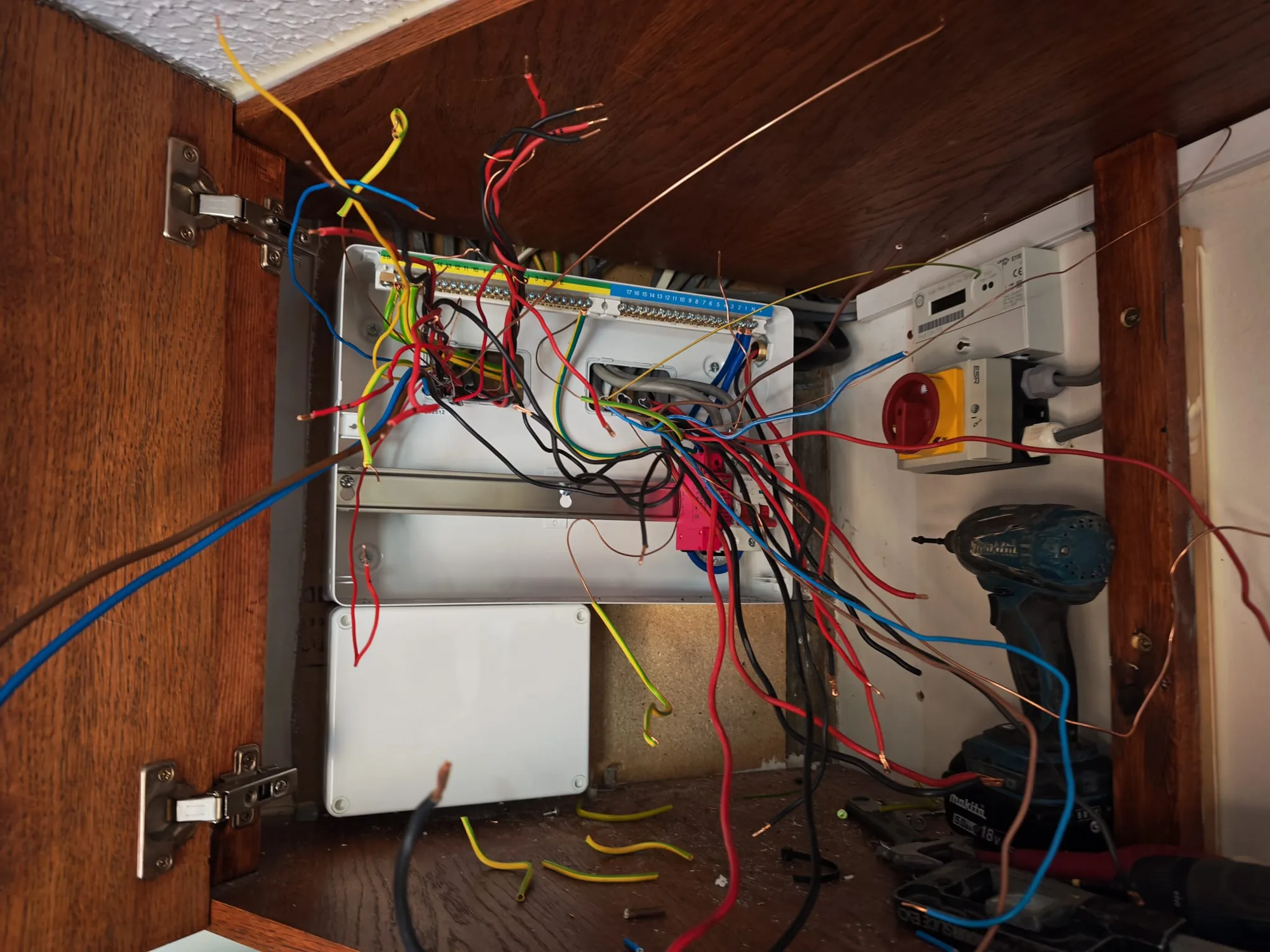
Picture a wet Sunday evening. Someone plugs in a kettle, the toaster is already on, and suddenly half the house goes dark. You head out to the cupboard under the stairs, open a grubby metal box full of old fuse wire, and have no idea which switch does what. That old fuse board is doing exactly what it was designed to do decades ago, but homes have moved on and it hasn't. In this guide I'll walk through what your consumer unit is for, the signs it's ready for an upgrade, and why a modern board with a clear circuit diagram makes your home both safer and far easier to live with.
What Your Consumer Unit Actually Does
Your consumer unit, often still called the fuse board or fuse box, is where the incoming electricity supply is split into the separate circuits that run through your home. It is the single most important piece of electrical safety equipment you own, and it quietly does three jobs.
- It divides the supply: Lights, sockets, the cooker, the shower and any outbuildings each sit on their own circuit rather than all sharing one. That is why you can work on one part of the house while the rest stays on.
- It protects against overload: Each circuit has a device that cuts the power if too much current flows, for example if a cable is overloaded or a fault develops. This is what stops wiring overheating and causing a fire.
- It protects against shock: A modern board also disconnects the supply in a fraction of a second if electricity starts leaking to earth, which is often the difference between a nasty surprise and a serious injury.
An older board can still divide the supply, but it usually falls short on the shock protection, and that is where the safety gap opens up.
Signs It Might Be Time to Upgrade
You do not have to wait for something to go wrong. Here are the signs I most often see when a board is due for replacement.
- Old rewireable fuses: If your board uses fuse wire that you rewire by hand rather than switches that flick back up, it is an old design with no shock protection built in. These boards are decades past their best.
- No RCD protection: If there is no test button on the board, it almost certainly has no residual current device, which is the part that guards against electric shock. This is one of the main reasons an upgrade is worth doing.
- Cracked or scorched casing: A cracked plastic enclosure, brown scorch marks, or a smell of hot plastic around the board all point to a fault or overheating and should be looked at straight away.
- Frequent, unexplained trips: The odd trip happens, but a board that keeps cutting out for no clear reason is telling you something. It may be a failing circuit or a board that can no longer cope.
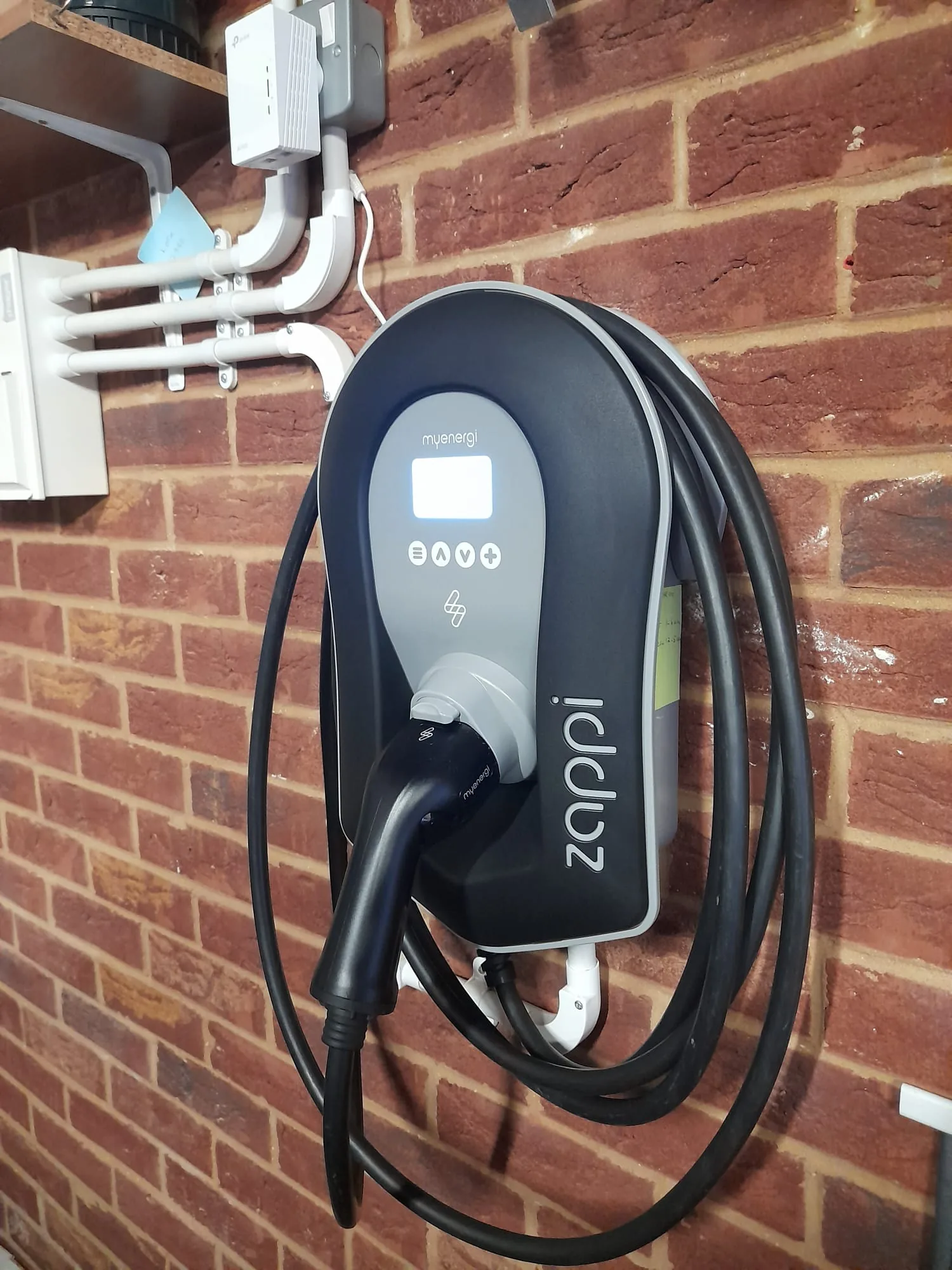
- Before a rewire or EV charger: If you are having the house rewired or a home EV charger fitted, it is often the ideal time to upgrade the board so the new work is properly protected from the start.
- A wooden or metal box with no labels: Older boards mounted on a wooden backboard, or with no clear labelling, are usually well overdue for a modern replacement.
If any of these sound familiar, it is worth having the board looked at. I will always tell you honestly whether an upgrade is genuinely needed or whether yours is fine as it is.
Thinking About Upgrading Your Board?
Consumer unit upgrades are what I specialise in, from £600 supplied and fitted. Call me, Sam, on 07500 500506 or get a free quote.
Get a Free QuoteRCD Versus RCBO Boards
This is the part that makes the biggest practical difference to daily life, so it is worth understanding the two main types of modern board.
- Split-load RCD boards: An older style of modern board groups your circuits behind one or two shared residual current devices. It is a real safety improvement over a fuse board, but there is a catch. If one circuit develops an earth fault, the shared RCD trips and takes every circuit on that side down with it. A fault in a garden socket can leave half your house in the dark.
- RCBO boards: On a modern RCBO board every single circuit has its own combined protection. If one circuit faults, only that one circuit trips. The rest of the house carries on as normal, so a problem with the outside lights no longer knocks out your fridge, freezer and heating.
I fit RCBO boards as standard, because the safety is better and the convenience is a world apart. When a fault does happen, you lose one circuit rather than half the house, and it is far quicker to work out what caused it.
Surge Protection Explained
Every consumer unit replacement now includes a surge protection device, or SPD. This is a requirement now, not an optional extra. A surge is a sudden spike in voltage on the supply, and it can come from a nearby lightning strike, from the grid, or from large appliances switching on and off. Modern homes are full of electronics that do not enjoy those spikes, from boilers and heat pumps to TVs, computers and EV chargers.
An SPD sits inside the consumer unit and diverts those spikes safely to earth before they reach your appliances. It will not stop a direct lightning hit, but it does protect against the far more common everyday surges that quietly shorten the life of sensitive equipment. Whether one is worth fitting depends on your installation, and I will tell you plainly if it makes sense for your home rather than adding it as a default extra.
The Circuit Diagram I Include
Here is the part you will not get from most electricians. With every consumer unit upgrade I produce a professional CAD circuit diagram of your home, and it changes how you live with your electrics.
It is a clear computer drawing of your property showing where your lights and sockets actually are, with each one labelled to the circuit that isolates it. So when a circuit trips, you can look at the drawing and see exactly which circuit controls the room you are worried about and everything connected to it. There is no guessing, no flicking switches at random, and no standing in the dark trying to remember which way was up.
It also makes future work easier. If you or another electrician ever needs to isolate a circuit to change a light or add a socket, the drawing shows precisely what to switch off. A well labelled board is good practice. A labelled board plus a proper drawing of the home is genuinely useful for years, and it is included, not an optional extra.
What an Upgrade Costs
A consumer unit upgrade with Peacock Electrical starts from £600 supplied and fitted. The exact price depends on the size of the board, how many circuits you have, and whether any remedial work is needed once the old unit comes off.
For that price you get a fully certified RCBO board, individual protection on every circuit, surge protection fitted as standard, and the CAD circuit diagram of your home. I will give you a clear, honest quote before any work starts, keep the job tidy, and leave you with a safer, better documented installation.
Frequently Asked Questions
Most straightforward board changes take a single day. Your power is off for part of that time while I swap the unit over and test each circuit, so I will let you know roughly how long to expect. If any remedial work is needed it can add time, and I will always talk that through with you first.
Sometimes yes and sometimes no, and I will always be honest about it. Older boards with rewireable fuses or no RCD protection are worth upgrading for safety, and it is often recommended alongside a rewire or an EV charger. If yours is perfectly fine as it is, I will tell you.
On an RCBO board every circuit has its own protection, so a fault only trips that one circuit. On an older split-load RCD board, circuits share protection, so a single fault can take out half the house at once. RCBO is safer and far more convenient, and it is what I fit as standard.
Yes. Peacock Electrical is NAPIT registered, so every upgrade is carried out and certified to current wiring regulations. I treat your home as a home rather than a worksite, keep the job tidy, and finish with your certification and a CAD circuit diagram of your property.